
THE TECHNOLOGY
One graphene architecture.
Multiple ways to interact.
LATIDO® builds on GMOD®, the patented graphene micro-membrane platform developed and owned by SCALE Nanotech. Microscopic membranes create a new way for surfaces to work with light and sound.
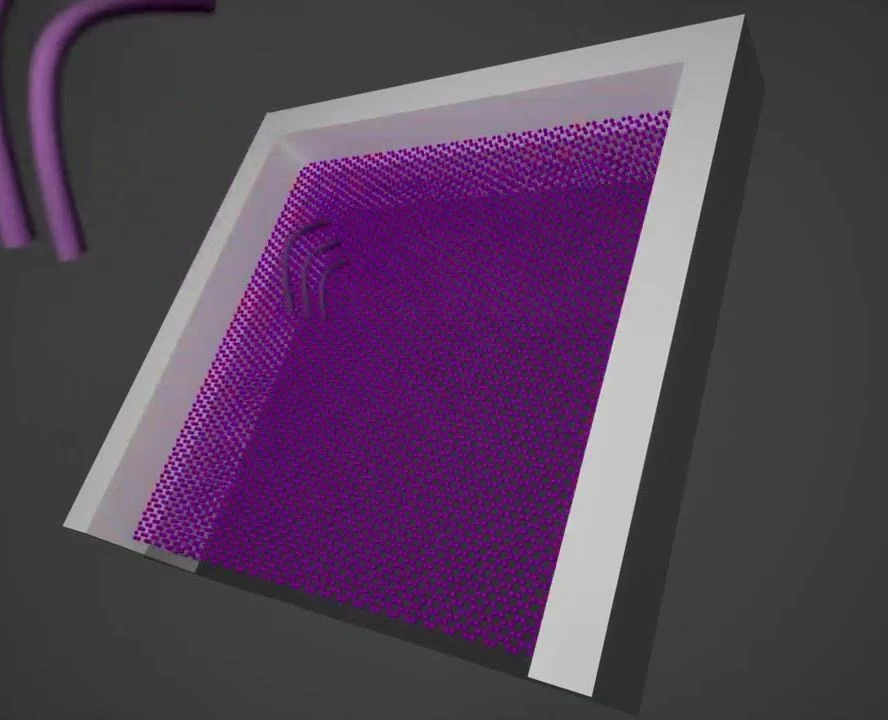
AT THE MEMBRANE LEVEL
From material movement
to meaningful experience.
Graphene micro-membranes transduce and modulate light and sound. Rather than adding separate optical and acoustic elements to a product, LATIDO® brings these functions closer together at the surface level.
Dragon Elements is advancing this foundation toward independently addressable audiovisual elements, control electronics and integrable evaluation modules.
EXPLORE THE PLATFORM
Four directions.
One technology foundation.
Light, shaped at the surface.
Graphene membranes modulate reflected light and color. Working hardware establishes the optical foundation for programmable visual effects and future reflective interfaces.
Sound from a different source.
The membrane technology generates audible sound, opening new possibilities for acoustic elements and audiovisual experiences within a common surface architecture.
Toward surfaces that respond.
Laboratory observations of acoustic reception and light-responsive electrical behavior support a roadmap for listening, sensing and responsive-surface applications.
& CONNECT
A wider photonics horizon.
GMOD® optical modulation research extends toward spatial light control, beam shaping, holography and optical communications. Specialized applications build on the underlying technology platform.
INSIDE THE PIXEL
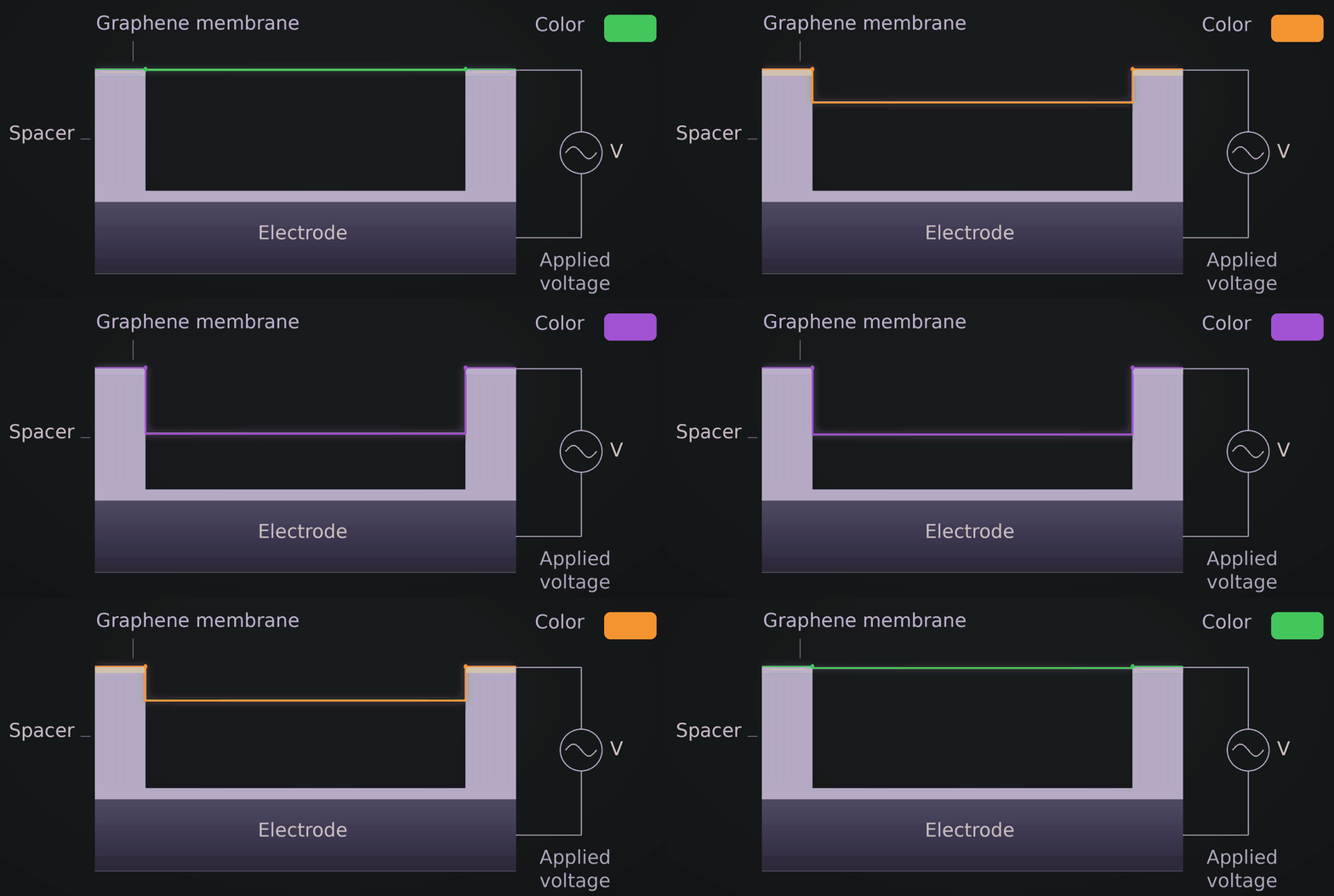
A membrane
in motion.
An applied voltage moves the suspended graphene membrane relative to the substrate. This cross-section illustrates the operating principle behind the pixel.
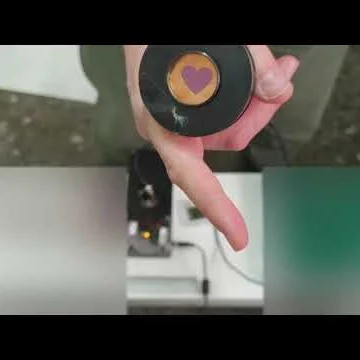
EVIDENCE YOU CAN SEE AND HEAR
Explore the real hardware.
Actual demonstrations establish the foundation.
Application concepts show where it could go.
THE NEXT VALUE-CREATING MILESTONE
From demonstration
to partner integration.
The development program connects engineering progress with the requirements of future industrial applications.
- 01
Address & control
Independently addressable elements and drive/control electronics.
- 02
Characterize & integrate
Quantified optical and acoustic performance, repeatability and system integration.
- 03
Package & evaluate
Partner-evaluable modules, application qualification and component design-in.
THE NEXT CONVERSATION
Bring your application
into the conversation.
For industrial partnerships, technology evaluations and strategic investment conversations.